



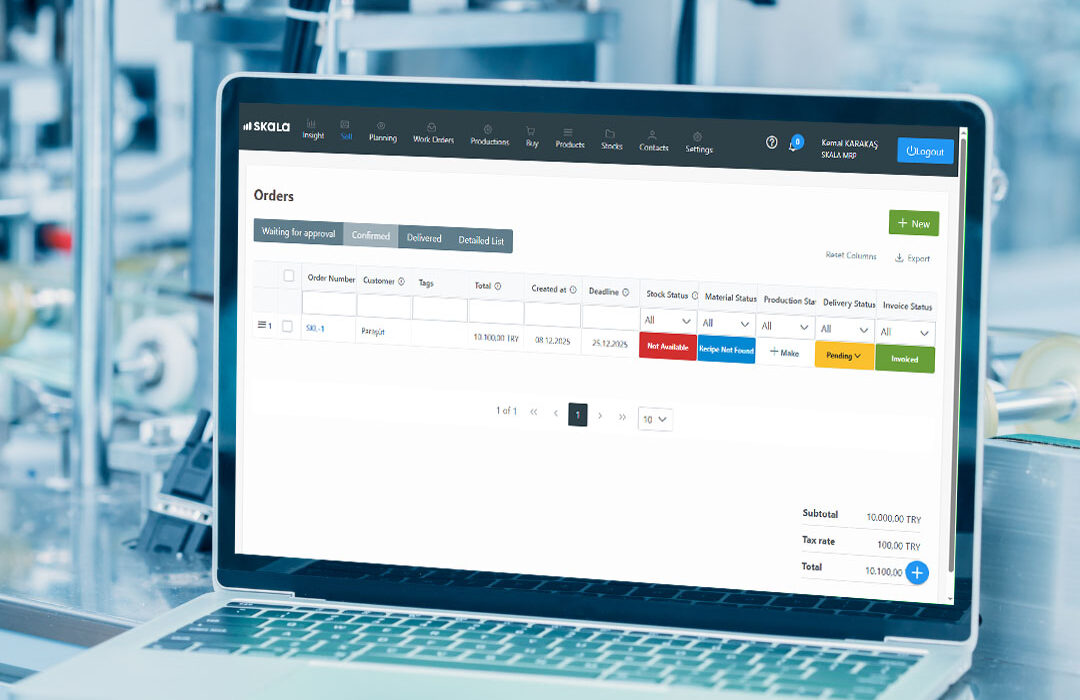
A Guide for Manufacturers: How Digital Transformation in Manufacturing Begins
As competition in the manufacturing sector continues to increase, companies must stand out not only through their production capacity but also through their operational efficiency. This is where digital transformation in manufacturing becomes a significant opportunity, especially for small and medium-sized manufacturers. By moving production processes into digital systems with the right tools, businesses can achieve better planning, lower operational costs, and faster decision-making.
Many small manufacturers believe that digital transformation is only necessary for large factories. In reality, the opposite is true. With the help of digital tools, SMEs can make their operations more visible, controlled, and sustainable.
Start your digital transformation in manufacturing with Skala today.
What Is Digital Transformation in Manufacturing?
Digital transformation in manufacturing refers to managing production, inventory, planning, and operational processes through digital systems.
This transformation typically includes:
- Managing production planning through digital tools
- Automating inventory and material tracking
- Digitally managing work orders
- Monitoring production data in real time
- Automating reporting and analytics
As a result, manufacturing processes become more transparent, and managers can make more informed decisions.
Why Digitalization Can Feel Difficult for Small Manufacturers
Many small manufacturers postpone digital transformation initiatives. There are several common reasons for this:
1. Dependence on Excel
Many companies manage production planning, inventory tracking, and order management through spreadsheets. While this may work initially, it becomes difficult to manage as operations grow.
2. Perception of Complex Software
Some manufacturing software solutions are designed for large enterprises and may appear complicated for smaller operations.
3. Cost Concerns
Businesses may assume digital transformation requires large investments. However, with the right solutions, it can be accessible and practical.
Benefits of Digital Transformation in Manufacturing
When implemented correctly, digital transformation offers several advantages for manufacturing companies.
1. More Accurate Production Planning
Digital systems allow orders, inventory, and production capacity to be planned together, helping prevent delayed orders and unplanned production.
2. Better Inventory Control
Companies gain clear visibility into raw materials and semi-finished goods, reducing the risk of overstocking or stock shortages.
3. Greater Production Visibility
Manufacturers can easily track which production stages are completed, ongoing, or delayed.
4. Faster Decision-Making
Real-time data enables managers to identify problems earlier and respond quickly.
5. Improved Operational Efficiency
Manual and repetitive tasks are reduced, allowing teams to focus on more productive activities.
Where Should Manufacturers Start Their Digital Transformation?
Digital transformation in manufacturing does not happen overnight. It usually progresses through small but impactful steps.
1. Digitizing Inventory Management
Managing stock through a system instead of spreadsheets creates immediate improvements.
2. Moving Production Planning to a Digital System
Managing orders and production schedules digitally helps prevent planning errors.
3. Managing Work Orders Digitally
Production teams can track which tasks they are working on through the system.
4. Reporting Production Data
Collecting and analyzing data forms the foundation for continuous improvement.
Practical Digital Solutions for SMEs
For small manufacturers, the key to successful digital transformation is choosing systems that are easy to implement and do not complicate operations.
Manufacturing management solutions designed for SMEs allow companies to manage:
- inventory management
- production planning
- work order tracking
- reporting
from a single platform.
These systems help small and medium-sized manufacturers build an operational infrastructure that allows them to compete more effectively in the market.
Today, digital transformation in manufacturing is not just a technological upgrade; it is a strategic step toward building a competitive and sustainable operation.
For small manufacturers, digitalization means better production control, improved planning, and long-term operational stability. With the right tools and systems, this transformation can gradually evolve into a structure that supports the entire business.
Companies that want to make their production processes more visible, organized, and efficient should view digital transformation not as an option, but as an essential investment for the future.
